
This month, we are taking a look at the bigger picture of what Communities for Life is working to accomplish in Peru.
Communities for Life exists to provide hope and opportunity for people, families, and communities to grow, thrive, and become self-sustaining.
At the heart of this mission is a belief that every person is created in the image of God and possesses inherent dignity, worth, abilities, and potential.
For many families, poverty does not reflect their ability or desire to build a better future. Limited access to education, nutritious food, safe housing, employment, infrastructure, and practical resources can make it incredibly difficult to move forward.
Communities for Life was established in response to this reality.
Our goal is to walk alongside people and provide the opportunities, practical skills, resources, and support they need to create lasting change in their own lives. Rather than creating dependence, we want to help individuals strengthen their families, develop sustainable livelihoods, become leaders, and contribute to healthier communities for generations to come.
The challenges families face are often deeply connected. Poor nutrition can affect health and learning. Limited education can restrict employment opportunities. Unemployment can make it difficult to improve housing or provide for a family. Unsafe housing can affect health, security, and stability.
That is why Communities for Life takes a holistic approach through our Four Pillar Development Model.
The Life Resource Center serves as a hub for education, mentoring, leadership development, collaboration, and community engagement.
Economic Development creates opportunities for vocational training, food security, entrepreneurship, employment, financial stability, and sustainable livelihoods.
Urban Design focuses on thoughtful planning, infrastructure, environmental stewardship, and creating safe and healthy neighbourhoods.
Housing helps provide families with safe and functional homes where children can learn, families can grow, and greater stability can take root.
These pillars are supported by a Foundation of Twenty Core Values, rooted in biblical and Judeo-Christian teaching. We intentionally incorporate values such as integrity, responsibility, stewardship, compassion, respect, accountability, and servant leadership throughout our programs.
We believe practical skills can create opportunity, while strong character helps people use those opportunities to serve their families and communities well.
Today, Communities for Life offers 19 programs that work together to address different needs within the community.
From baking, cabinetry, construction, sewing, barbering, nail technology, jewelry-making, and balloon decoration to gardening, water conservation, English language learning, youth development, education, and more, each program provides another pathway for people to learn and grow.
Some programs prepare students with skills they can use to pursue employment or generate income. Others address food security, education, leadership, housing, and community development. Together, they share the same purpose: creating opportunities for people to develop their potential and build a future they can sustain.
This month, we want to take a closer look at two programs addressing one of the most fundamental needs for families: access to nutritious food.
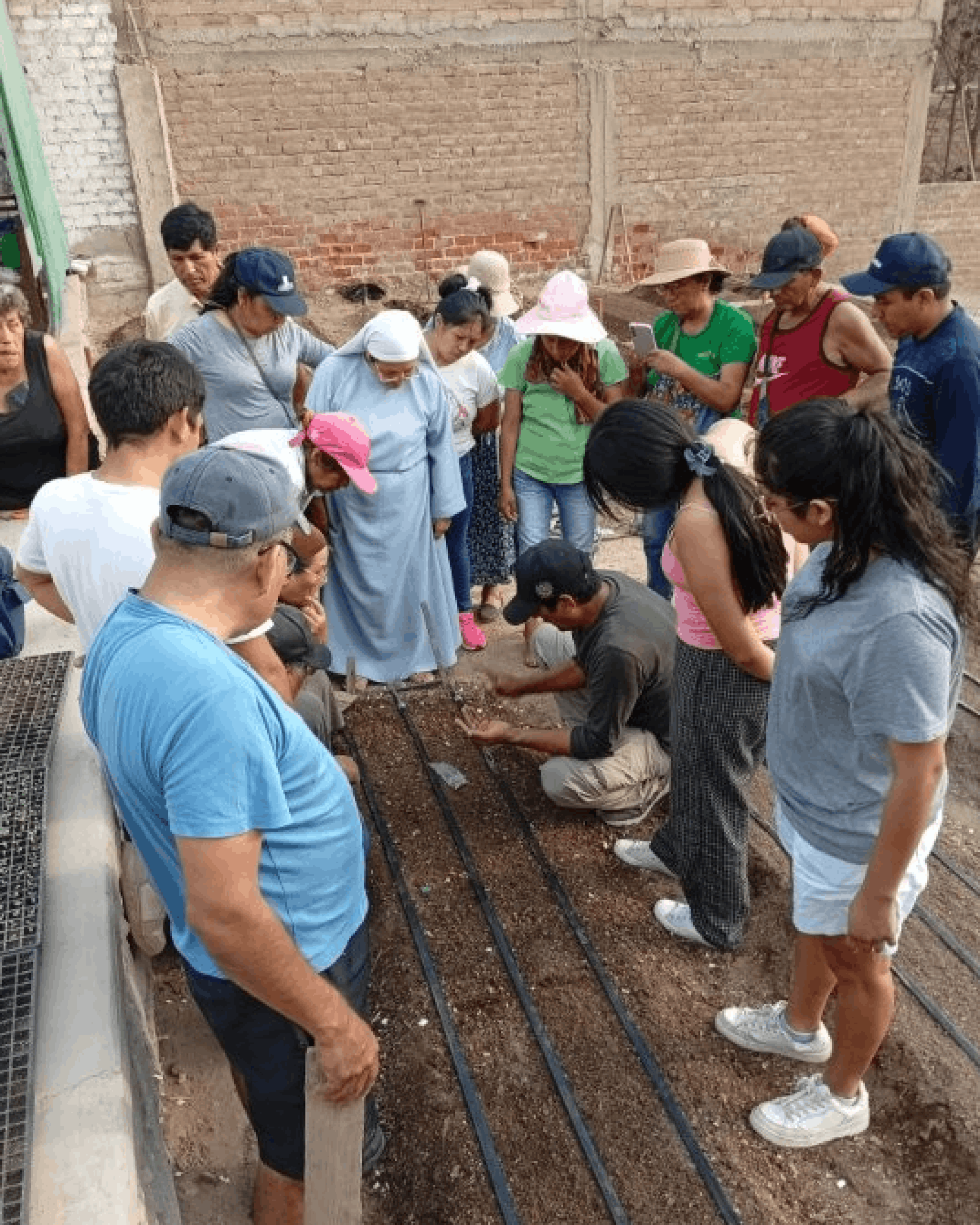
Growing fresh food in Manchay presents a unique challenge. The region's extremely dry desert conditions and infertile soil make conventional gardening incredibly difficult.
The Organic Family Gardening Training Program was designed to show that these challenges can be overcome.
Over six months, participants receive practical training using 40 individual garden plots. Students learn soil preparation, seeding, organic growing methods, efficient irrigation, plant care, harvesting, and sustainable food production.
An agronomist designed the garden specifically for Manchay's conditions. It gives students a practical example of how productive gardens can be established even in an environment with limited water and challenging growing conditions.
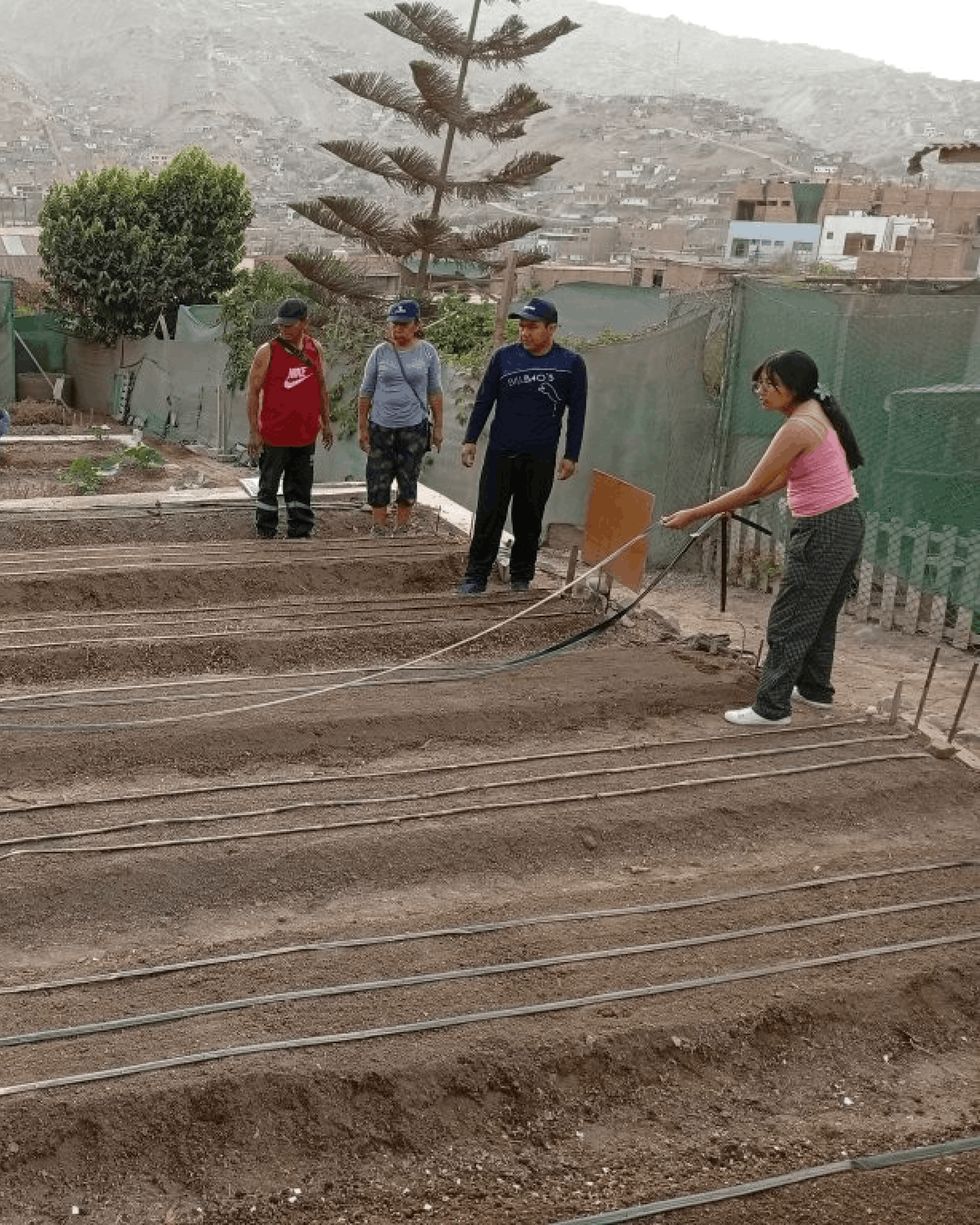
Along the way, students are also developing values such as responsibility, perseverance, patience, gratitude, cooperation, sharing, and stewardship.
The knowledge gained here can continue long after the six-month program ends, helping families take practical steps towards producing nutritious food for themselves.
Graduating from the gardening program is only the beginning.
The Home Growing Garden Program helps graduates put what they learned into practice at home.
Many families in Manchay live in modest homes without conventional garden space. Instead of letting that become a barrier, students learn to use what they have. Vegetables can be grown in small containers and available spaces around the home using simple, efficient irrigation methods.
Communities for Life helps participating graduates get started by providing basic gardening tools, seeds, and mini-irrigation systems.
A small space can become a source of fresh food for a family.
Graduates have shared encouraging stories about the difference fresh, nutritious food has made for their families. Beyond the harvest itself, tending a home garden gives participants an opportunity to practice responsibility, patience, perseverance, gratitude, and stewardship.
It is a simple but powerful example of what self-sustainability can look like: taking knowledge gained through training and using it to create lasting change at home.
Communities for Life could not accomplish this work alone.
Local churches, businesses, educational institutions, governments, foundations, volunteers, and community leaders all bring different strengths to the table. By working together, we can encourage local leadership and community ownership while building solutions designed to last.
Ultimately, we measure success beyond the number of programs offered or classes completed. We want to see people discover hope, embrace opportunity, realize their God-given potential, strengthen their families, become responsible leaders, and help build communities that can sustain their own future.
Every class requires a teacher. Every practical skill requires tools and equipment. Every new opportunity requires people willing to invest in making it possible.
Donations to Communities for Life help support local teachers, practical training, equipment, supplies, and resources that allow these programs to continue reaching individuals and families in Manchay.
Your donation can help bring life and resources to the people of Manchay and create opportunities that continue long after a course is complete.
Together, we can help bring hope to a community and equip people with the tools to build a stronger future for themselves, their families, and generations to come.
.png)